

Thrive Integrative Cancer Care provides complementary cancer care through telehealth that works alongside your oncologist. This guide covers how to choose, verify, and utilize these services. It explains costs, risks, and long-term outcomes for patients seeking holistic support.
How to Choose a Telehealth Provider
Selecting the right provider requires looking beyond marketing claims. You need a team that respects your primary oncologist. The best providers act as partners, not replacements. They should have clear protocols for communication with your medical team.
Look for board-certified professionals. A provider should have credentials in medical oncology or naturopathic medicine. They must understand the difference between evidence-based complementary therapies and unproven alternatives. Avoid providers who promise to cure cancer using only natural remedies. This is a red flag for unsafe practice.
Integration with Conventional Care
True integrative care bridges the gap between standard treatment and holistic support. The provider should ask for your oncologist's contact information. They should send summaries of their recommendations to your primary team. This ensures that supplements or lifestyle changes do not interfere with chemotherapy or immunotherapy.
What to Ask Before Committing
Prepare a list of specific questions for your initial consultation. These questions reveal the provider's depth of knowledge and their operational model. You want to understand exactly how they will support you during treatment.
- Do you have a direct line of communication with my oncologist?
- How do you handle potential interactions between supplements and my current medications?
- What is your approach to managing treatment side effects like nausea or fatigue?
- Do you offer a personalized care plan or a one-size-fits-all protocol?
Pay attention to how they answer. A good provider will emphasize safety and collaboration. They will not dismiss your conventional treatment. They will explain the evidence behind their recommendations.
How to Verify Credentials and Claims
Verification is critical in the telehealth space. You cannot see the provider in person, so you must check their digital footprint. Start by verifying their medical license. Most states have online license lookup tools. Ensure the provider is licensed in the state where you reside.
Check for board certification. For medical oncologists, look for certification by the American Board of Medical Specialties. For naturopathic doctors, look for certification by the American Board of Naturopathic Medicine. These credentials ensure a baseline of training and ethical standards.
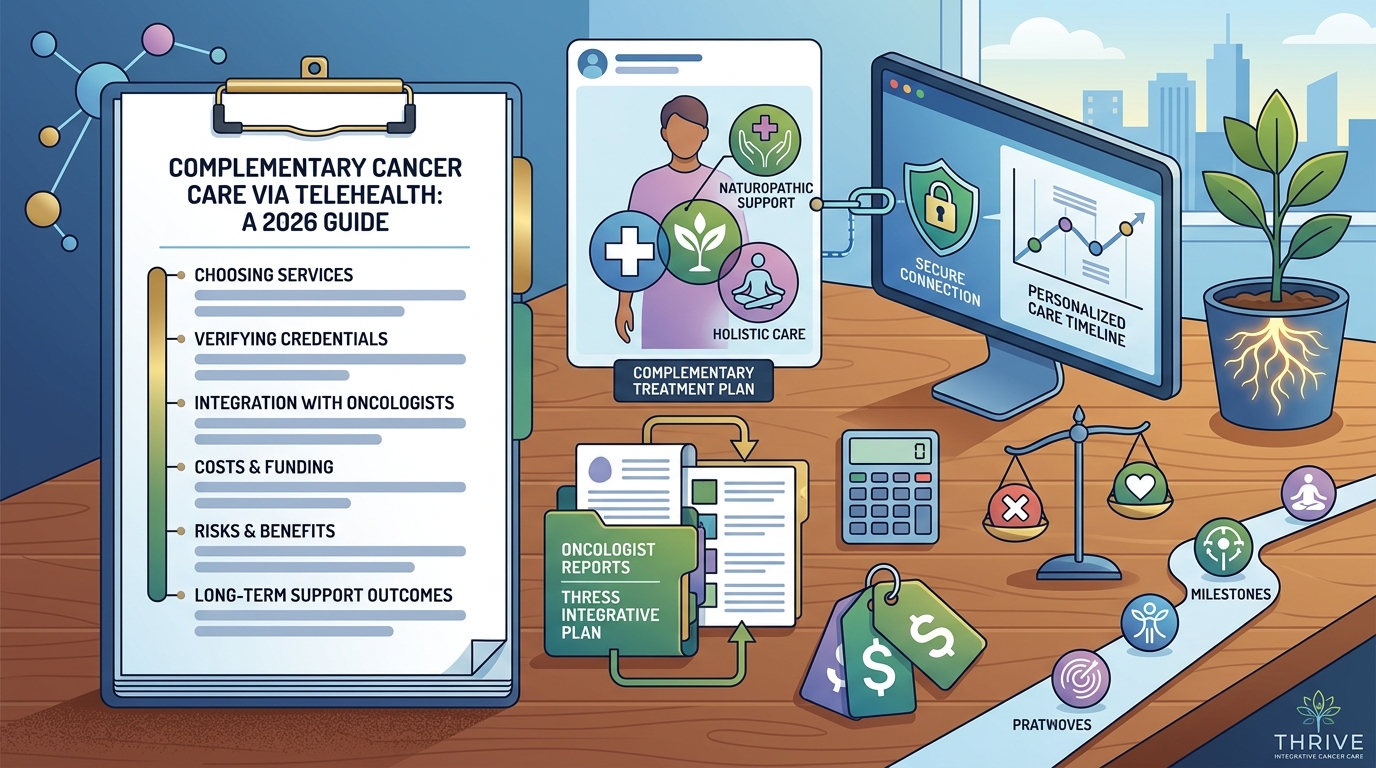
Checking Professional Affiliations
Look for membership in recognized professional organizations. These groups often have strict codes of ethics. They require members to stay current with continuing education. A provider who is active in these groups is more likely to follow best practices.
How Telehealth Integrative Care Works
The process typically begins with a comprehensive intake. You will fill out detailed forms about your diagnosis, treatment history, and lifestyle. This data helps the provider understand your unique needs. The first appointment is usually a video call. It lasts between 60 and 90 minutes.
During this session, the provider reviews your medical records. They discuss your goals and concerns. They may order additional lab work if needed. After the assessment, they create a personalized care plan. This plan includes nutritional guidance, lifestyle modifications, and supplement recommendations.
Ongoing Support and Monitoring
Telehealth care is not a one-time event. It involves regular follow-up appointments. These sessions track your progress and adjust the plan as needed. You may have shorter check-ins between major appointments. This ensures you have support when you need it most.
What It Costs and What Drives the Price
Costs for integrative telehealth vary widely. They depend on the provider's credentials and the scope of services. A board-certified medical oncologist typically charges more than a naturopathic doctor. The price also reflects the complexity of your case. Patients with multiple comorbidities may require more time and testing.
Some providers offer membership programs. These plans provide ongoing support for a monthly fee. Others charge per visit. You should ask for a clear breakdown of costs upfront. Understand what is included in the fee. Does it cover lab work? Does it include access to a support portal?
Insurance and Reimbursement
Insurance coverage for integrative care is limited. Most plans do not cover complementary therapies. However, some may cover the medical consultation portion. Check with your insurance provider before starting. Ask if they accept out-of-network billing. This can affect your out-of-pocket costs significantly.
Common Mistakes and How to Avoid Them
One common mistake is hiding your integrative care from your oncologist. This can lead to dangerous interactions. Always keep your primary team informed. Another mistake is stopping conventional treatment to pursue holistic options. This is never recommended. Integrative care is meant to support, not replace, standard treatment.
Patients also make the mistake of buying supplements without guidance. Some supplements can interfere with cancer treatments. For example, high-dose antioxidants may reduce the effectiveness of chemotherapy. Always consult your provider before starting any new supplement.
Red Flags to Watch For
Be wary of providers who make absolute guarantees. No one can guarantee a cure. Be cautious of providers who discourage you from seeing your oncologist. This is a major red flag. A reputable provider will always encourage you to maintain your relationship with your primary care team.
Versus In-Person and Other Alternatives
| Feature | Telehealth Integrative Care | In-Person Integrative Care |
|---|---|---|
| Convenience | High, no travel required | Lower, requires travel and time |
| Physical Exam | Limited or none | Full physical examination |
| Cost | Often lower due to lower overhead | Higher due to facility costs |
| Access to Specialists | Wider geographic reach | Limited to local providers |
Many patients use a hybrid approach. They see their oncologist in person for treatment. They use telehealth for ongoing integrative support. This combines the benefits of both models.
For a Specific Situation: Active Treatment
If you are currently undergoing chemotherapy or radiation, timing is crucial. You need support that addresses your immediate side effects. Nausea, fatigue, and neuropathy are common. A good provider will focus on symptom management first. They will help you maintain your strength and nutrition.
During active treatment, you should avoid major lifestyle changes. Your body is under stress. Small, manageable adjustments are better than drastic overhauls. Focus on hydration, gentle movement, and adequate sleep. Your provider can guide you through these steps safely.
Post-Treatment Considerations
Rules and Protections That Apply
Providers must also adhere to scope of practice rules. A naturopathic doctor cannot prescribe chemotherapy. A medical oncologist cannot perform acupuncture. Understanding these boundaries helps you set realistic expectations. It also ensures you are receiving safe, appropriate care.
Local Specifics and Licensing
Licensing laws vary by state. A provider must be licensed in the state where you are located during the appointment. This is known as the