

What Credentials Should I Look for in a Naturopathic Doctor Who Treats Cancer Patients via Telehealth?
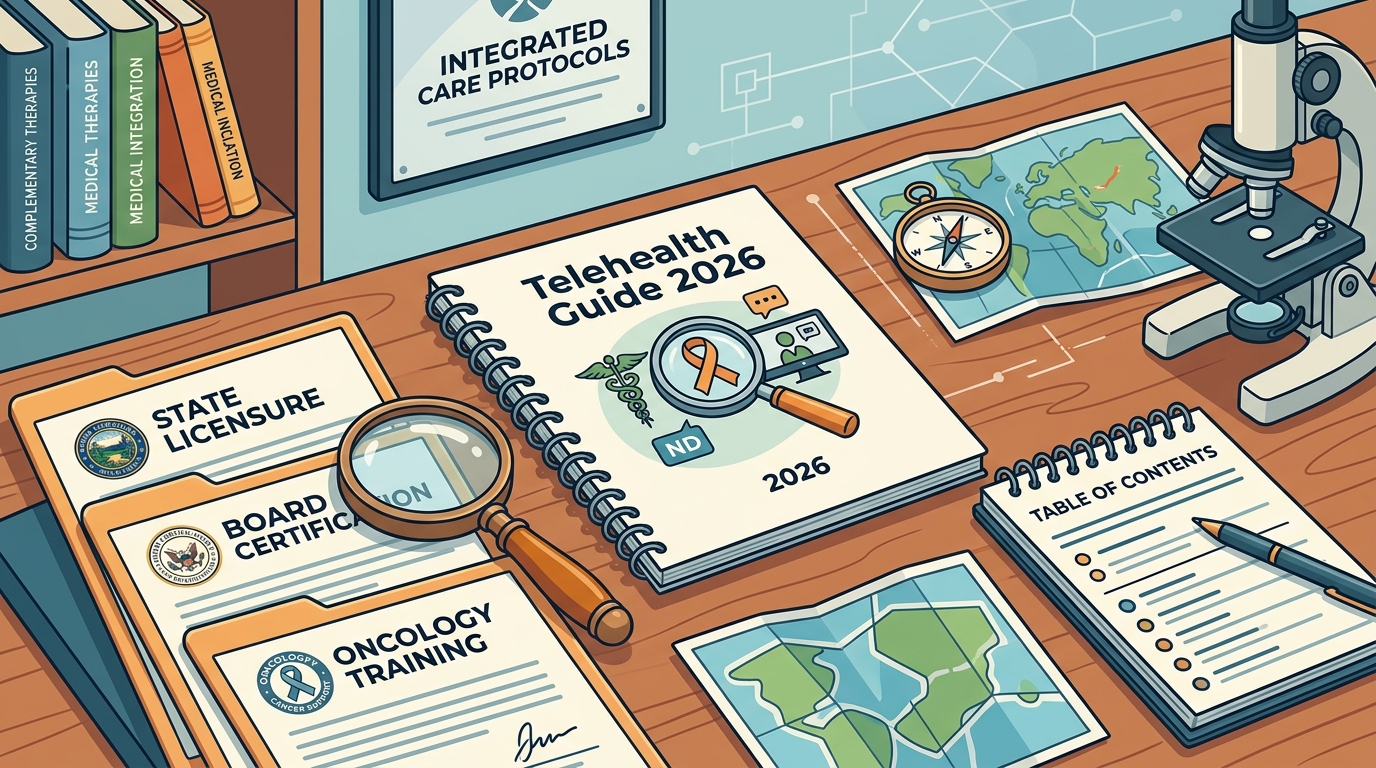
When selecting a naturopathic doctor for cancer care via telehealth, you must verify state licensure, board certification, and specific oncology training. The provider must hold a valid license in your state of residence and demonstrate evidence-based integration with your conventional oncologist. This guide covers how to evaluate credentials, verify claims, understand costs, and navigate the telehealth process safely.
How to Choose: Separating Qualified Providers from Unqualified Ones
Choosing the right provider requires distinguishing between licensed medical professionals and unlicensed practitioners. A licensed naturopathic doctor (ND) is a primary care physician who has completed a four-year accredited doctoral program and passed national board examinations. In contrast, a naturopathic physician (NMD) is a specific designation for those who have passed the NPLEX board exams and hold a state license. Many unlicensed practitioners use the title "naturopath" without any medical training or legal authority to practice medicine.
Licensure vs. Certification
Licensure is a legal requirement granted by a state government that allows a practitioner to diagnose and treat patients. Certification is a voluntary credential awarded by a professional board that demonstrates specialized knowledge. For cancer care, you need both. Look for a provider who is licensed in your state and certified by the American Board of Naturopathic Physicians (ABNP). This dual status ensures they have met the minimum legal standards and have demonstrated advanced competency in their field.
Oncology-Specific Training
General naturopathic training covers a wide range of conditions, but cancer care requires specific expertise. A qualified provider should have additional training in integrative oncology. This includes understanding how supplements interact with chemotherapy, immunotherapy, and targeted therapies. At Thrive Integrative Cancer Care, our team, led by Dr. Nancy Sharma, combines medical oncology expertise with naturopathic support to ensure safe, evidence-based care.
What to Ask: Specific Questions Before Committing
Before booking an appointment, you should ask specific questions to gauge the provider's approach and safety protocols. These questions help you determine if the provider prioritizes patient safety and collaboration with your conventional care team.
Questions About Safety and Integration
Ask the provider how they coordinate with your oncologist. A safe provider will request your treatment records and communicate directly with your medical team. Ask if they have a protocol for managing drug-nutrient interactions. For example, some antioxidants can interfere with radiation therapy. A qualified provider will have a clear, evidence-based approach to these risks.
Questions About Credentials and Experience
Ask for their specific credentials, including their license number and board certification. Ask how many cancer patients they have treated and what types of cancer. Ask if they have completed any specific integrative oncology programs. These questions help you verify their experience and ensure they are a good fit for your specific diagnosis.
How to Verify: Checking Credentials and Claims
Verifying credentials is a critical step in ensuring your safety. You can check a provider's license status through your state's medical board or naturopathic licensing board. Most states have online databases where you can search by name or license number. This database will show if the license is active, if there are any disciplinary actions, and if the provider is in good standing.
Checking Board Certification
You can verify board certification through the American Board of Naturopathic Physicians (ABNP) website. The ABNP maintains a directory of certified naturopathic physicians. If a provider claims to be board certified, they should be listed in this directory. If they are not, ask for clarification. Some providers may be certified in a specific specialty, such as oncology, which is a higher level of credential.
Verifying Educational Background
Check the provider's educational background. They should have graduated from an accredited naturopathic medical school. The Council on Naturopathic Medical Education (CNME) accredits naturopathic medical schools in the United States. You can verify if a school is accredited through the CNME website. This ensures that the provider received a rigorous, standardized education.
How It Works: The Telehealth Process and Timeline
Telehealth appointments for cancer care typically follow a structured process designed to provide comprehensive, personalized support. The initial consultation is usually longer than a standard follow-up visit to allow for a thorough assessment. At Thrive Integrative Cancer Care, our initial comprehensive visit is a 75-minute virtual appointment. This extended session allows ample time to address your concerns thoroughly and establish a comprehensive, integrative approach to your cancer care.
The Initial Consultation
The initial consultation involves a comprehensive assessment of your cancer diagnosis, treatment history, current symptoms, lifestyle habits, and emotional health. Your provider will review any existing lab work and determine if additional testing is needed. Together, you will discuss various treatment options, which may include nutritional guidance, lifestyle modifications, supplement or medication recommendations, and referrals to other specialists or supportive therapies.
Follow-Up Visits and Care Plan
After the initial consultation, you will collaborate with your provider to create a tailored plan aimed at achieving your health goals. Follow-up visits are typically shorter, ranging from 30 to 60 minutes, and are scheduled at intervals determined by your treatment phase. These visits allow your provider to monitor your progress, adjust your care plan, and address any new symptoms or concerns. The frequency of follow-up visits depends on your specific needs and the intensity of your conventional treatment.
What It Costs: Factors Driving Price
The cost of naturopathic cancer care via telehealth varies based on several factors. These factors include the provider's experience, the complexity of your case, and the specific services included in your care plan. Initial consultations are typically more expensive than follow-up visits because they require more time and a more comprehensive assessment. Follow-up visits are usually less expensive and are scheduled at regular intervals to monitor your progress.
Factors Influencing Cost
Several factors can influence the cost of your care. The complexity of your cancer diagnosis and treatment plan can increase the cost, as it may require more frequent visits and additional testing. The specific services included in your care plan, such as nutritional counseling, immune support, or mental health support, can also affect the cost. Some providers offer membership programs that include a set number of visits and services for a monthly fee. These programs can be more cost-effective for patients who require ongoing support.
Insurance and Payment Options
Insurance coverage for naturopathic care varies widely. Some insurance plans cover naturopathic services, while others do not. It is important to check with your insurance provider to determine if naturopathic care is covered and if the provider is in-network. If your insurance does not cover naturopathic care, you may need to pay out-of-pocket. Some providers offer sliding scale fees or payment plans to make their services more accessible. At Thrive Integrative Cancer Care, we offer various membership programs and non-member services to accommodate different budgets and needs.
What Goes Wrong: Common Mistakes to Avoid
Patients often make mistakes when selecting a naturopathic provider for cancer care. One common mistake is choosing a provider based solely on their marketing claims or online reviews. Another mistake is failing to verify the provider's credentials and licensure. These mistakes can lead to unsafe care and potential harm.
Ignoring Drug Interactions
One of the most serious risks in integrative cancer care is drug-nutrient interactions. Some supplements can interfere with the effectiveness of chemotherapy or immunotherapy. A qualified provider will have a clear protocol for managing these interactions and will communicate with your oncologist to ensure your safety. If a provider does not ask about your current medications or does not communicate with your medical team, this is a red flag.
Choosing Unlicensed Practitioners
Another common mistake is choosing an unlicensed practitioner. Unlicensed practitioners do not have the legal authority to diagnose or treat medical conditions. They may provide advice that is not based on evidence or that could be harmful. Always verify that your provider is licensed in your state and board certified. This ensures that they have met the minimum standards for safety and competency.
Versus Alternatives: Comparing Care Models
There are several alternatives to naturopathic care for cancer patients. These include conventional oncology care, integrative oncology programs at academic medical centers, and complementary and alternative medicine (CAM) practitioners. Each model has its own strengths and limitations.
| Model | Focus | Pros | Cons |
|---|---|---|---|
| Conventional Oncology | Tumor treatment | Highly effective for tumor control | May not address side effects or quality of life |
| Integrative Oncology (Academic) | Combination of conventional and complementary care | Evidence-based, multidisciplinary team | May have long wait times, less personalized |
| Naturopathic Care (Telehealth) | Whole-person support, side effect management | Personalized, flexible, focuses on quality of life | May not be covered by insurance, requires careful selection of provider |
| CAM Practitioners | Alternative therapies | Wide range of options | May lack medical training, potential for harm |
At Thrive Integrative Cancer Care, we offer a comprehensive approach that combines the strengths of integrative oncology and naturopathic care. Our programs are designed to support your physical, emotional, and spiritual well-being during active treatment and survivorship.
For a Specific Situation: Active Treatment vs. Survivorship
The credentials you should look for may vary depending on your specific situation. If you are undergoing active cancer treatment, you need a provider who has specific experience in managing treatment side effects and drug interactions. If you are in survivorship, you may need a provider who specializes in long-term health and prevention.
Active Treatment
During active treatment, your primary goal is to manage side effects and maintain your quality of life. A qualified provider will have specific training in integrative oncology and will work closely with your oncologist to ensure your safety. They will have a clear protocol for managing common side effects such as nausea, fatigue, and neuropathy. At Thrive Integrative Cancer Care, our Active Cancer Care & Support Program is designed to help patients who are undergoing treatment. It integrates medical oversight, nutritional & metabolic support, immune care, symptom management, lifestyle coaching, and emotional & spiritual care to improve daily quality of life during active treatment.
Survivorship
In survivorship, your primary goal is to maintain your health and prevent recurrence. A qualified provider will have specific training in cancer survivorship and will work with you to create a long-term wellness plan. They will focus on managing long-term side effects, optimizing your immune health, and supporting your emotional well-being. At Thrive Integrative Cancer Care, our Cancer Survivorship Program supports individuals living through and beyond cancer. It begins at diagnosis and continues post-treatment, focusing on personalized follow-up care, managing long-term side effects, and improving physical, emotional, and metabolic health for long-term wellness.
Rules and Protections: Legal and Safety Standards
Naturopathic care is regulated by state laws, which vary widely. In some states, naturopathic doctors are licensed to practice medicine, while in others, they are not. It is important to understand the legal status of naturopathic care in your state. This will help you understand the scope of practice and the protections available to you as a patient.
Scope of Practice
The scope of practice for naturopathic doctors varies by state. In some states, NDs can prescribe medications, perform minor surgery, and provide primary care. In other states, their scope of practice is more limited. It is important to understand the scope of practice in your state to ensure that the provider is legally allowed to provide the services you need. You can find information about the scope of practice in your state through your state's medical board or naturopathic licensing board.
Patient Rights and Protections
As a patient, you have the right to receive safe, evidence-based care. You have the right to ask for the provider's credentials and to verify their licensure and board certification. You have the right to ask about their experience with cancer care and their approach to drug interactions. You have the right to refuse any treatment that you are not comfortable with. If you feel that your provider is not providing safe care, you have the right to seek care from another provider.
Local Specifics: State Licensing and Telehealth Laws
Telehealth laws vary by state, and these laws can affect your ability to receive care from a provider in another state. In some states, a provider must be licensed in the state where the patient is located to provide telehealth services. In other states, there are exceptions for certain types of care. It is important to understand the telehealth laws in your state to ensure that your provider is legally allowed to provide care to you.
State Licensing Requirements
Most states require that a provider be licensed in the state where the patient is located to provide telehealth services. This means that if you are in a state where naturopathic care is not licensed, you may not be able to receive care from a naturopathic doctor in another state. However, some states have exceptions for certain types of care, such as nutritional counseling or mental health support. It is important to check the specific laws in your state to determine if your provider is legally allowed to provide care to you.
Telehealth Platforms and Security
Telehealth platforms must comply with federal and state privacy laws, including HIPAA. This ensures that your health information is protected and that your communications with your provider are secure. When choosing a telehealth provider, ask about their platform and their security measures. A qualified provider will use a HIPAA-compliant platform and will have clear policies for protecting your privacy.
Timing: When to Act and How It Affects Outcomes
Timing is a critical factor in integrative cancer care. Starting integrative care early in your treatment can help you manage side effects and maintain your quality of life. Delaying integrative care can lead to unmanaged symptoms and a decline in your overall well-being. It is important to start integrative care as soon as possible, ideally before or at the start of your conventional treatment.
Early Intervention
Early intervention with integrative care can help you establish a baseline for your health and identify any potential risks. It can also help you build a relationship with your provider and your care team. This relationship is essential for providing safe, effective care. At Thrive Integrative Cancer Care, we encourage patients to start integrative care as soon as possible. Our initial comprehensive visit is designed to provide a thorough assessment and to create a personalized care plan that supports your goals.
Adjusting Over Time
Your care plan should be adjusted over time as your treatment progresses and your needs change. Regular follow-up visits allow your provider to monitor your progress and make adjustments to your care plan. This ensures that your care remains safe and effective throughout your treatment and survivorship. The frequency of follow-up visits will depend on your specific needs and the intensity of your treatment.
Results Over Time: Measurable Outcomes
The outcomes of integrative cancer care can be measured in several ways. These include improvements in quality of life, reduction in treatment side effects, and improvements in physical and emotional well-being. A qualified provider will work with you to set specific, measurable goals and will track your progress over time.
Quality of Life
One of the primary goals of integrative cancer care is to improve your quality of life. This can be measured using standardized questionnaires that assess your physical, emotional, and social well-being. Improvements in quality of life can have a significant impact on your overall health and your ability to cope with your treatment. At Thrive Integrative Cancer Care, we focus on improving your daily quality of life during active treatment. Our programs are designed to help you cope and thrive while treatment is ongoing.
Long-Term Wellness
In survivorship, the goal is to maintain your long-term wellness and prevent recurrence. This can be measured by tracking your physical health, your immune function, and your emotional well-being. A qualified provider will work with you to create a long-term wellness plan that supports your goals. This plan may include nutritional guidance, lifestyle modifications, and regular monitoring of your health. At Thrive Integrative Cancer Care, our Cancer Survivorship Program focuses on improving your physical, emotional, and metabolic health for long-term wellness.
Key Takeaways
- Verify that your provider is licensed in your state and board certified by the ABNP.
- Look for specific training in integrative oncology and experience with cancer patients.
- Ask about the provider's approach to drug-nutrient interactions and communication with your oncologist.
- Check the provider's credentials through your state's medical board and the ABNP directory.
- Understand the cost of care and check if your insurance covers naturopathic services.
- Be aware of the legal status of naturopathic care in your state and the telehealth laws that apply.
- Start integrative care early in your treatment to manage side effects and maintain your quality of life.
- Track your progress over time using specific, measurable goals.
Frequently Asked Questions
What is the difference between a naturopathic doctor and a naturopathic physician?
A naturopathic doctor (ND) is a primary care physician who has completed a four-year accredited doctoral program and passed national board examinations. A naturopathic physician (NMD) is a specific designation for those who have passed the NPLEX board exams and hold a state license. The terms are often used interchangeably, but NMD is a more specific credential.
How do I verify if a naturopathic doctor is licensed in my state?
You can check a provider's license status through your state's medical board or naturopathic licensing board. Most states have online databases where you can search by name or license number. This database will show if the license is active, if there are any disciplinary actions, and if the provider is in good standing.
Can a naturopathic doctor prescribe medications?
The scope of practice for naturopathic doctors varies by state. In some states, NDs can prescribe medications, while in others, they cannot. It is important to understand the scope of practice in your state to ensure that the provider is legally allowed to provide the services you need.
How does telehealth work for cancer care?
Telehealth appointments for cancer care typically follow a structured process designed to provide comprehensive, personalized support. The initial consultation is usually longer than a standard follow-up visit to allow for a thorough assessment. Follow-up visits are typically shorter and are scheduled at intervals determined by your treatment phase.
What should I ask a naturopathic doctor before booking an appointment?
Ask about their specific credentials, including their license number and board certification. Ask how many cancer patients they have treated and what types of cancer. Ask if they have completed any specific integrative oncology programs. Ask how they coordinate with your oncologist and their approach to drug-nutrient interactions.
Is naturopathic care covered by insurance?
Insurance coverage for naturopathic care varies widely. Some insurance plans cover naturopathic services, while others do not. It is important to check with your insurance provider to determine if naturopathic care is covered and if the provider is in-network.
What are the risks of choosing an unlicensed naturopathic practitioner?
Unlicensed practitioners do not have the legal authority to diagnose or treat medical conditions. They may provide advice that is not based on evidence or that could be harmful. Always verify that your provider is licensed in your state and board certified. This ensures that they have met the minimum standards for safety and competency.
How long does it take to see results from integrative cancer care?
The time it takes to see results from integrative cancer care varies depending on your specific needs and the intensity of your treatment. Some patients may see improvements in their quality of life and reduction in side effects within a few weeks. Others may take longer to see significant changes. It is important to work with your provider to set specific, measurable goals and to track your progress over time.